Section Gravitas
Section Gravitas: Faster, More Insightful Performance Reporting
Overview
Previously, performance reporting at Gravitas was highly manual.
Data had to be exported from different platforms, cleaned manually in spreadsheets, validated by hand, and then translated into client-ready reports. For Looker Studio reports, the team still had to manually update visuals, select screenshots, key in certain figures, and write the insights.
Competitor reporting was also time-consuming. Strategists had to open each competitor’s platform, check posts one by one, identify top-performing content, choose what looked notable, and then manually compare it against the client’s own account. The process worked, but it depended heavily on manual judgment and had limited structure for comparison.
The main problem was not only time. The old process made reporting slower, less consistent, and harder to scale across multiple clients.
Role
I helped build and improve the reporting workflow by turning repeated manual steps into reusable automation and AI-assisted skills.
My role focused on identifying bottlenecks in the reporting process, creating skills to reduce repeated manual work, and connecting raw performance data, competitor data, and report outputs into a faster first-draft workflow.
Goal
The goal was to reduce the time needed to produce a first draft while improving the quality of the insight layer.
Instead of spending most of the reporting cycle on data cleaning, formatting, screenshot collection, and blank-page writing, the team should be able to start from cleaner data, structured comparisons, and AI-assisted draft insights.
What I built
I built and used internal skills that support the reporting process from raw data to first draft.
For data cleaning, the workflow helps process raw exports from different platforms, clean the data, and validate the output against the original raw numbers. This reduces manual spreadsheet work while keeping the final numbers grounded in the source data.
For report creation, the workflow supports faster first drafts by turning screenshots, tables, and structured inputs into usable report formats such as HTML and PPTX-style outputs. In some cases, report drafts can be generated from existing data and screenshots, then refined for client use.
For insight writing, the team can use AI to analyze the cleaned data, identify performance patterns, summarize key movements, and generate first-pass commentary. This changes the reporting process from writing from scratch to reviewing, improving, and sharpening a draft.
For competitor reporting, I helped move the process away from manual checking across each competitor platform. Competitor data can now be pulled from sources such as Meta Graph API, Metricool, Instaloader, and Apify, including collab posts that are often missed in standard platform exports. More on this here: Section Gravitas: Competitor Intelligence Platform
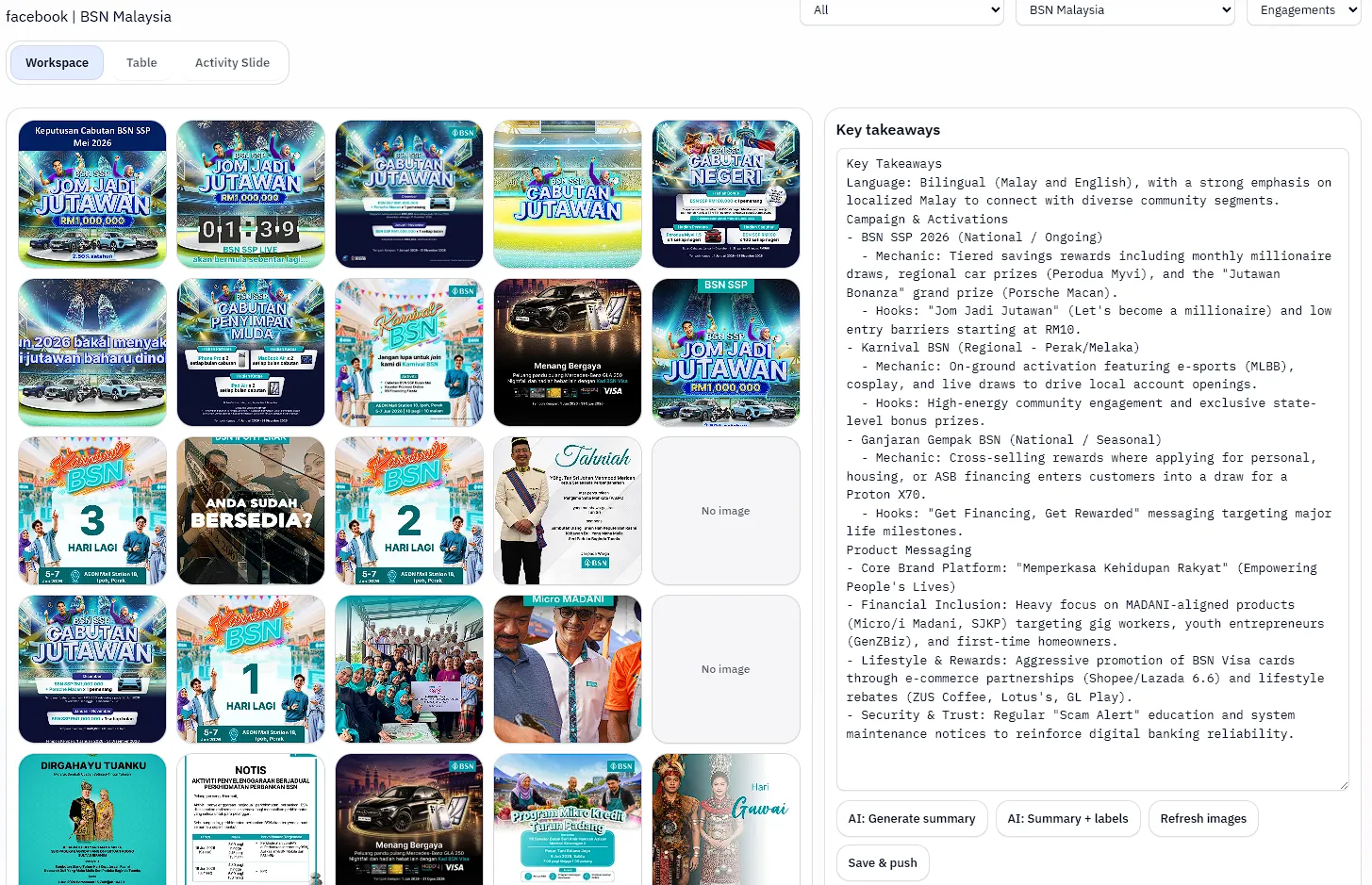
This makes it easier to identify which KOLs or creators competitors used, how much engagement those posts generated, which posts performed best, and how competitor activity compares against the client’s own account.
One example is the Friso Gold competitor research workflow, which uses competitor data from Social Atlas (our internal tool, more here: Section Gravitas: Competitor Intelligence Platform) and other scraping workflows to generate a more structured competitor activity report. Instead of relying only on manually selected notable posts, the team can compare content, engagement, follower data, creator activity, and campaign patterns more systematically.
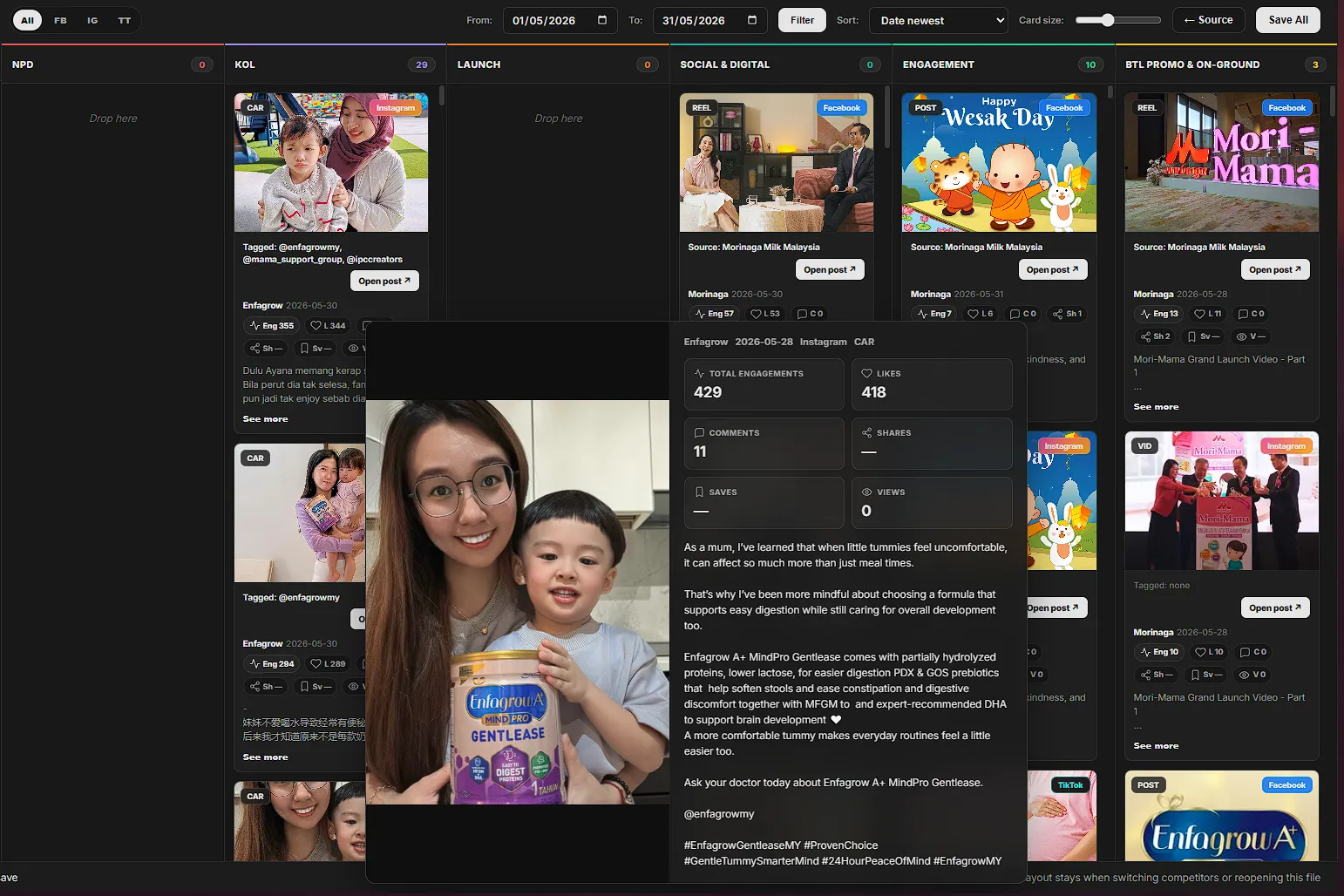
Using gravitas gateway as well (Section Gravitas: Making the Performance Team Agentic), the team can talk directly with the AI about the data to get better insights as gravitas gateway have access to the database.
Result
The reporting workflow is now faster and more insight-led.
Data cleaning is less manual. First drafts can be created faster. Competitor reporting is more structured. Insight writing starts from an informed draft instead of a blank page.
This gives the team more time to review the analysis, discuss the strategy, and improve the final recommendations instead of spending most of the reporting cycle on repetitive production work.
The value is not only speed. The system also improves the quality of comparison by making competitor analysis more evidence-based, structured, and easier to reuse across reports.